Search This Blog

Monday, October 28

Kale Kraze

Kale is enjoying quick and wide-spread acceptance on the local market. It features in the diet regimens of the health conscious and fitness enthusiasts. But where was this kale before all this attention? Somewhere in a dark corner of the discerning backyard gardeners yard space. But now with the introduction to the commercial market, the consumer response has been described as hungry chickens rushing to feed on dried, chopped coconut.

Why you should have kale

To whom do we credit the kale movement? The individual motivation to healthy lifestyles must be acknowledged in the first instance. Increased access to information has fostered greater personal responsibility in the prevention and management of health conditions such as obesity and nutrient deficiencies. Perhaps, we are juicing kale for all its worth for its anti-oxidant properties as increasing mortality from Chronic Non-Communicable Diseases creeps closer to home.  The work of the local Ministry of Agriculture, Food Production, Fisheries and Rural Development in promoting said produce has also increased market share. I was witness to a long line of persons eager to sample juiced kale at the World Food Day 2013 activities.


Kale presented for sale at the Rodney Bay Farmers' Market

Interestingly, "kale" is slang for "money" as seen in the Merriam Webster Online Dictionary. This urban terminology is apt. While the seedling price for other green,leafy vegetables for example lettuce is $0.40, kale seedlings cost $0.80. Market prices are comparatively the same with parcels of almost the same size sold for the same price. So how is this new green gold adding to the pockets of farmers? The volumes of kale sold far exceed that of lettuce. This leafy veggie is worth your consideration whether you are living the motto "health is wealth", or simply for wealth,.


Tuesday, October 22

Your Cup of Tea- Gwo diten

A plant by so many other names, it is known locally as Gwo Diten, French Creole for Big Thyme. 

The herb is most commonly used to add flavour for meat and poultry dishes. 

Traditional medicinal uses include treatment of:

  1. Coughs
  2.  Sore throats
  3. Nasal congestion
  4. Rheumatism 
  5. Flatulence
Also called Indian borage and Indian mint, the plant is used in Indian traditional medicines for the treatment of:
  1. Malarial fever
  2. Hepatopathy
  3. Renal and vesical calculi
  4. Chronic asthma
  5. Bronchitis
  6. Colic
  7. Epilepsy
  8. Skin ulcerations and allergies
Admittedly, I had never before considered that gwo diten could be used as a tea until a very healthy-looking, middle aged lady with great skin shared that she had daily cups of the brew. Don't be misguided by the trend of thought that herbal teas are "old people's medicines". In fact, the younger generation has lived many more experiences than the older generation has lived in their lifetimes; increased exposure to increasing pressures of life leave us feeling worn and weary. Herbs possess very powerful antioxidants to keep even youth looking and feeling youthful.

Anthurium Adventure

Going by the book

All products come with the instruction manual? In this case it is the "Cultivation Guide Anthurium-Global Know-How for Growers aaround the Globe". However, I do not want to thoroughly read this 140-page book in one sitting on a subject that I will not be formally tested on. Luckily I have had the benefit of field trips of the St. Lucia Floral  Co-operative Society Limited during which I was privy to best practices. Also, mentorship has provided me with a live resource to refer to as problems require resolutions.  

Written guide

Getting down to work

The plants that I am responsible for are already planted but are in desperate need of some tender and devoted loving care to bring them to optimal productivity. Light work, I imagined....
New beginnings


Leaf Cutting

Did you know that old anthurium leaves use much sugar at the expense of flower production? Leaves are  therefore pruned to divert more of the plant's energy towards flower production. Too many leaves results in aborted buds, damaged flower buds and crooked stems. Regular pruning is also necessary for better air circulation which reduces problems of molds and bacterial infections. My ideal number of leaves is 4.

Weeding and Irrigation

"Weeds are flowers too once you get to know them" says Winnie the Pooh character, Eeyore. In the flower production business, weeds once identified have to be removed. Regular weeding of ferns and other weeds are required for its control. Chemical control of weeds in anthurium production is not recommended particularly  for newly planted crops and when new shoots are desired. If your production site is not near to a water source then your next labour-intensive task is irrigation.  Mostly I just hope and pray and watch the weather forecasts for rain to save me this task.  
So much to do...

Pests

Everything that can happen will happen. Slugs and snails feed on root tips and damage the leaves and buds. Caterpillars feed on the leaves.  The slug bait has been set and I am monitoring for progress. While white flies are present in the shade house they do not present much of a challenge. Butterflies lay their eggs on the underside of leaves and caterpillars when hatched feed on the leaves and flowers. While frogs are not a problem to the plant they do reduce my own life line every time one jumps from the coconut husks at me!  


One of  the better flowers

Wednesday, October 16

The Jam Diaries-Golden Apple

It takes a community to make a pot of jam
'Tis the season of golden apples. The green fruit ripens into golden yellow and that is how the fruit got its name. That is my version of the golden apple story and I am sticking to it. Sticking to my fingers will be sugary brown golden apple jam. As I take stock of the ingredients, I realise that one key ingredient is missing-bwaden: one of the spices of life. A special effort is made with my home-made jams, since the commercial jams have a smaller spice content. I walk down the hillside, cross the river and up the slope to the neighbour's to get some leaves. Its time that I plant a tree near my home.
Fresh picked golden apples

Does size matter? 
Large product representations are often used in marketing to capture the interest of the consumer. For instance, cereal boxes advertise large flakes on the front of the package. Despite previous purchasing experience and the fine print disclaimer, we are hooked every time. Jam making is not an exception to the marketing rule. I opt for medium- to large-sized golden apples. This allows for losses in the cooking process as some of the golden apple will break down into the 'sauce'.

The sugar and spice and everything cooks nice
Golden apples are picked, washed and peeled. The coal pot is lit. I prefer cooking jams on charcoals. Some argue that anything cooked this way tastes better and its true. My other reasons are to save cooking gas and to keep the coal pot traditions alive. 
The spices of life
My select spices are cinnamon, bwaden and nutmeg (both the nut and the dried mace). I have been saving up nutmeg mace since I learnt they are great in jams.The sugar and spice are boiled with water to reach a thick sticky consistency. It is important that there is not much liquid in the pot at this time. When the golden apples are added, they will simmer in their own juices.The fruit is added and the pot checked periodically to check the progress of the jam.


Red hot glowing coals

And the pot bubbles over


It takes a community to eat a pot of jam
The pot is off the coal pot and cooled. 
Golden apple-y Goodness
It is time to test my jam making skills. I think it tastes delicious but that is unconfirmed until I receive feed back from the community. I prepare small packages of jam for neighbours and friends. And before you know it there is no jam left. It is time to prepare another pot.

Thursday, September 26

St. Lucia Floral Cooperative Field Trip


The St. Lucia Floral Cooperative Society Limited (SLFCSL) is the primary representative body of the flower producers in St. Lucia since its establishment in 1999.  Previously, the organization named the St. Lucia Flower Growers Cooperative performed this function. A historic perspective provided in “Profiles of Farmer Organisations in Saint Lucia” a publication of IICA, speaks of the Flower Growers Cooperative in its formative years as “experiencing the customary growing pains characterized by the vicious circle: farmers do not take an active role in the organization because the group cannot offer services, and the group cannot offer services because their membership is small and the farmers do not play an active role”.  From its headquarters at Vide Bouteille, Castries the SLFCSL manages its island-wide membership for increased productivity and developing local, regional and international markets. Some of the products marketed by the SLFCSL include anthuriums, heliconias and ginger lilies.
In the spirit of volunteerism, I have accompanied the SLFCSL on several field trips to their membership. The purpose of the interaction is to facilitate dialogue on production challenges and other concerns of the members. If you are new to the industry as I was, you will the following notes interesting:

Orchid production is growing business in St. Lucia. Although production has increased, large quantities of these blooms are imported to meet market demand. When bought from the Tissue Culture Lab at Union the medium used is sphagnum moss. However, the SLFCSL recommends washed pebbles as a sustainable option for transplanting with a small part of the initial sphagnum moss. For more orchid photos, please visit the D.I.G Facebook photo album.

Orchid
The ant, the farmer; the shepherd to be more precise. The symbiotic relationship between ants and mealy bugs is termed mutualism. Mealy bugs produce a sugary substance called honey dew, a source of nourishment for the ants. In exchange, the ants tend the mealy bugs, often “shepherding” the “herd” of mealy bugs to the better "grazing pastures" in softer leaves and protecting them from predators. The delicate balance: Without the ants to consume the accumulation of honey dew, sooty mold would cover the area of the leaf and prevent the plant’s food manufacturing process resulting in growth retardation. On the other hand, the ants also destroy the flowers by building their nests in the blooms. This was observed in heliconias.
The ant, the farmer

The white fly is a major pest challenge to the floral industry, with particular effect on orchids. They too produce honey dew which is growth medium for sooty mold.
Anthurium leaf: white flies on the underside (left); sooty mold on the top (right)

Beauty is in the eye of the beholder. Flowers of any kind are generally considered beautiful. Someone once commented that the beauty is powerful to stave off hunger. You would agree that the attraction of flowers is predominantly the brightly coloured petals. Consider then the beauty of “green anthuriums” and “brown hibiscus” hybrids.
Is this your kind of beautiful?
Saint Lucia flower production is not characterized by large farms, but primarily by backyard production. 
Feel free to contact the SLFCSL for assistance when you decide to start your venture or to participate in its floral subsciption service.


 ADDITIONAL RESOURCES:

St. Lucia Floral Cooperative Society

Profiles of Farmer Organisations in Saint Lucia

Tuesday, September 24

Your Cup of Tea- Worm Bush


Vermifuge-a medicine that expels parasitic, intestinal worms. The name of the worm bush or worm grass attests to its function. Other local names for the wormbush are "Zèb a vè" and "Semen contwé". When used for this purpose, oil is sometimes added. It is also believed to clean the womb after childbirth.

The bush is combined with other herbs as a remedy for 
  • Asthma
  • Cough
  • To treat wounds and sores (in the form of a poultice)
Worm bush (scientific name: Dysphania ambrosioides or Chenopodium ambrosioides) is credited with other healing properties and actions:
  1. Increases perspiration
  2. Functions as a natural diuretic: Increases urination
  3. Increases breast milk
  4. Promotes menstruation
  5. Stimulates digestion
  6. Kills cancer cells
  7. Mild sedative


It is said that the health benefits of any medicines can be gauged by how unpleasant the scent and taste. For some herbal medicines you may find yourself holding your breath while imagining cakes and candy. Worm bush is one such example. To subdue the strong taste, I usually add a few leaves of a minty tea such as basil. I hope this helps when next you have your cup of worm bush.


 ADDITIONAL RESOURCES:


Friday, September 13

A Tough Nut to Crack!


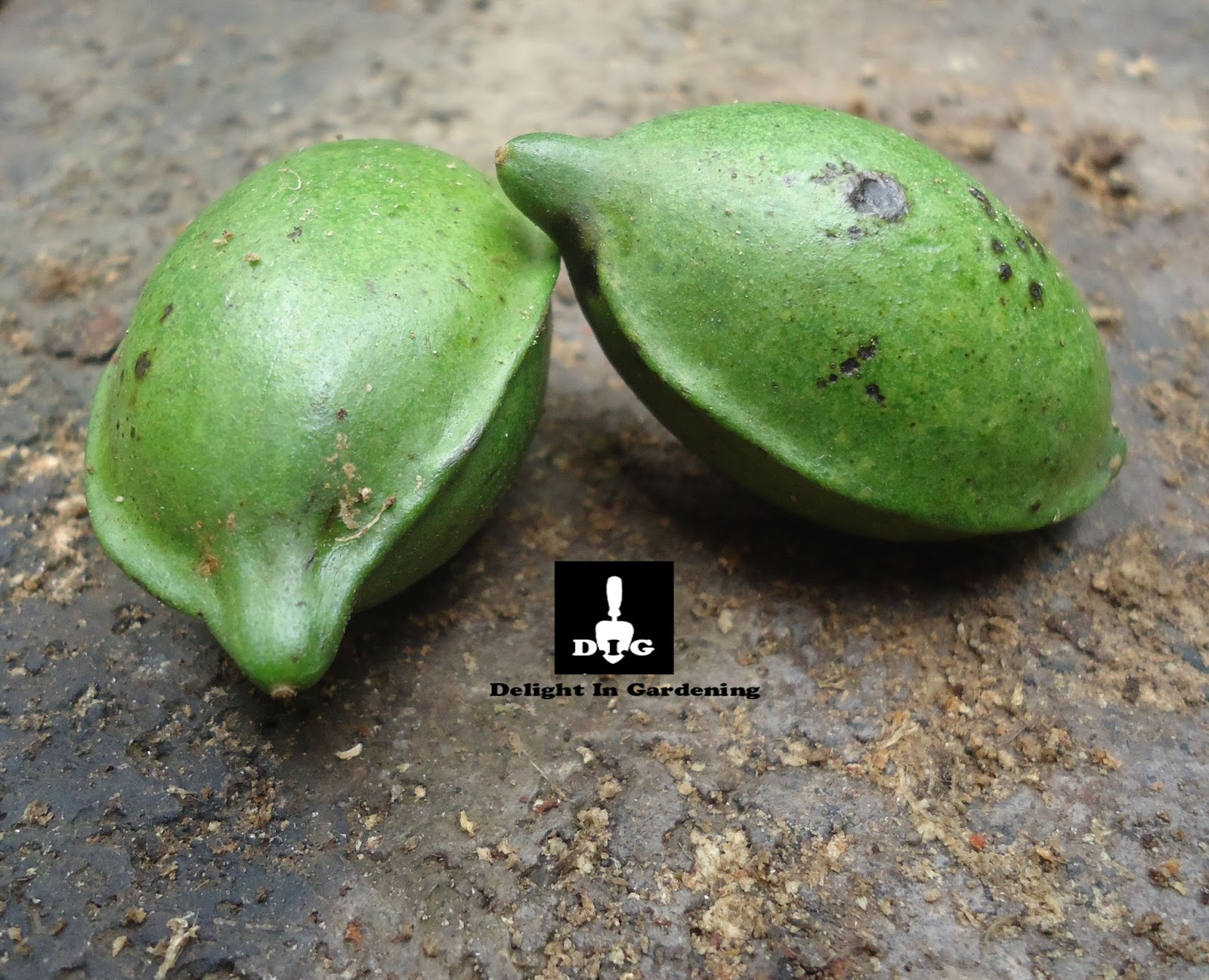
It’s been years since youthful(ler) energy was spent breaking almonds (local name: zanmann) with stones. Those were the years when the days were seemingly longer-a portion of afterschool hours spent in nut cracking and eating was a social and leisurely activity. Recently a neighbour offered me some from heaps of fallen almonds in her yard. My response: “I’m too old for that!”. But in retrospect what I had really felt was: “Who has time for that?”. Convenience- the lifestyle trend which led to the rise of commercial food processing and retailing. In the name of convenience we spend hundreds of thousands of dollars on imported almonds to place on supermarket shelves to satisfy consumer demand.

Young almonds


 Agriculture- A Labour of Love or A Love of Labour?

Dialogue on food security and local agribusiness is usually punctuated with remarks on the abundant produce supply and lack of agribusiness that add value to this abundance. Almonds are bountiful- in season. Apart from seasonality, another challenge to the development of agribusiness is low mechanization.  Today I sit bent over, painstakingly extracting almonds out of their shells as I am sure my Amerindian and African ancestors did centuries before. This is both time-consuming and energy-consuming. However, some enterprising (and strong) persons from the Micoud to Deruisseaux gaps, manually shell these nuts and bag the raw nuts for sale. Roasted cashew nuts are also sold in season. The general response of consumers are: “But they are so EXPENSIVE!”. Would our willingness to pay appreciate if we fully understood the process from tree to tray? The nuts have to be collected, dried, cracked, bagged and stored. For cashews there is the additional process of roasting. Not to mention the emotional drain of resisting the urge to snack on the nuts!


Dried almonds
Almonds also have their share of the cottage industry of local treats. Almond is made into a brittle with sugar, ginger, cinnamon and nutmeg.  Other staples of the sweet treats market include fudge, jams and jellies made from an assortment of fruits, "coffee tea: and "guava cheese".


Can you see it? The almond nut is on the left.

Can you imagine how mechanization would revolutionize the nut business? Much like the Industrial Revolution was to Europe, during which technological advancements led to increased and sustained production and economic growth. Mechanization will benefit the agricultural sector with
  •   Increased production volume that will extend market share beyond roadside vendors’ trays to supermarket shelves and compete with foreign almonds.
  •   Higher volumes would challenge the issue of seasonality, with nuts stored for year-round distribution.
  •   Industrial roasting and shelling for even roasting and consistent results.


Their nuts vs. Our nuts: Is bigger better?

Despite the obvious benefits, St. Lucian agriculture has not adapted to improved mechanisation. Financial constraints hinder aspiring agripreneurs. Do we challenge our leaders to creating an enabling environment for agribusiness? Have we become demotivated by fruitless attempts? Have our policy makers and other stakeholders made up their minds to relegate local almond production to availability in season in small quantities and high prices; much like an antique put on display at Jounen Kweyol (Creole Day)? 

Please share your thoughts on a contemporary agribusiness environment for St. Lucia and the Caribbean.

ADDITIONAL RESOURCES:
FAO Document on Small-scale Cashew Nut Processing: http://www.fao.org/inpho_archive/content/documents/vlibrary/ac306e/ac306e07.htm